
What is Spot?
A digital brain for your home and your work.
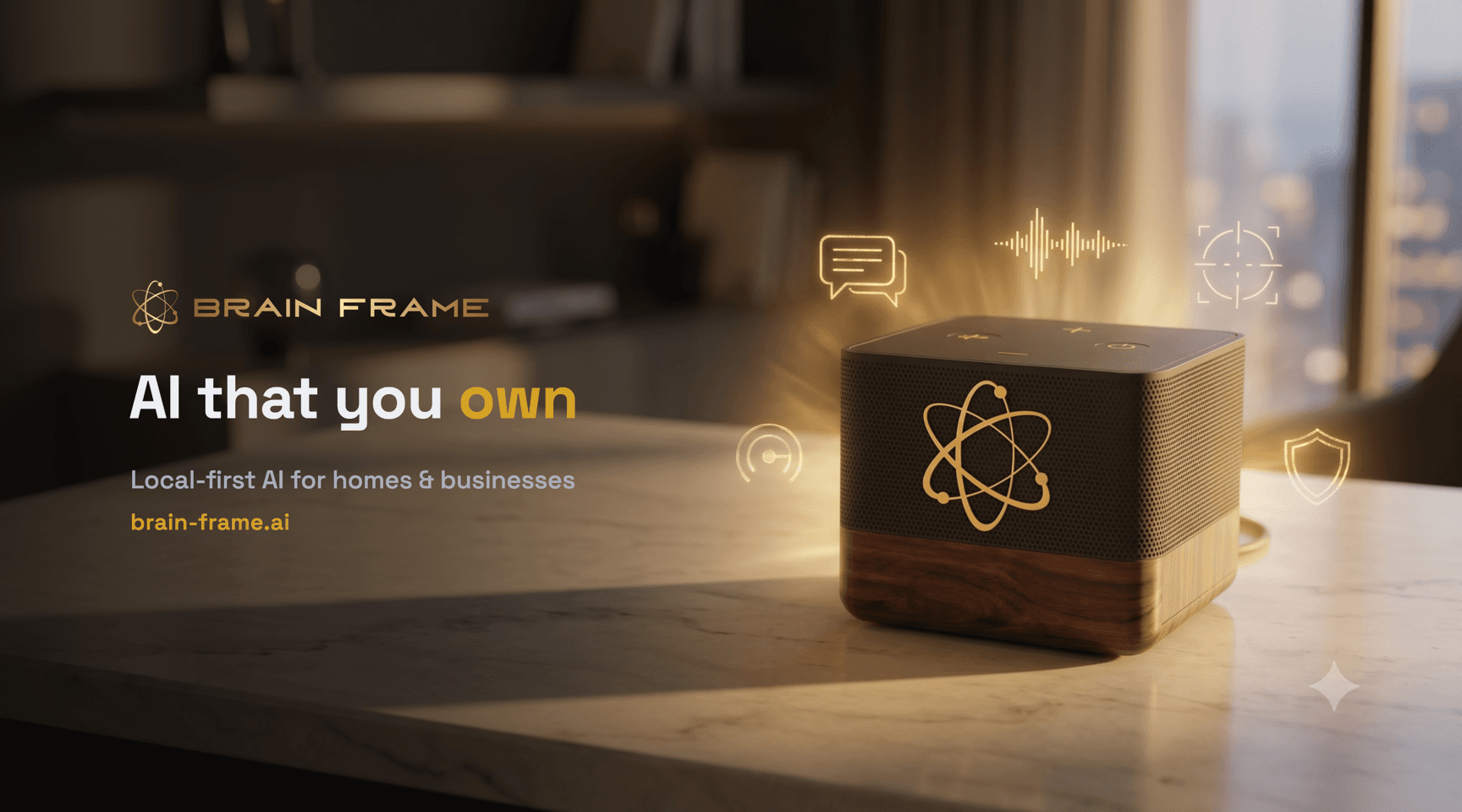
Spot is Brain-Frame's on-device AI agent. He runs a whole brain of models — on-device speech, vision, file search, automations, and connected-service tools — all on a small piece of hardware that lives on your network. The parts of your life you wouldn't paste into a cloud chatbot stay with you.
Overview
Spot in one paragraph.
Spot is a small, always-on computer that runs a whole brain of models, agents, and automations. You talk to Spot from your phone, desktop, or web browser; Spot handles the heavy lifting on your network and only reaches out to the cloud when it needs to. The result is an agent that can see your files, your calendars, your home, and your team — without those things needing to leave the building.
A brain of models, on-device
Language, speech, and vision models all run on the box you bought. No round-trip to a cloud assistant for every prompt.
Sovereign data
Conversation history, files, and connected-service tokens live on your network. Cloud is used as transport, not as the brain.
Real-world action
Spot can call tools — control IoT devices, read files, watch a camera, send notifications — through a permissioned action layer.
One agent for everything
Chat, voice, automations, alerts, calendar, and integrations are all backed by the same memory and the same agent.
How it works
A device, a network of clients, and the cloud as transport.
The Spot device is the brain. Mobile, desktop, web, and Watch clients are how you interact with it. The cloud relay is how those clients reach Spot when you're not on the same Wi-Fi.
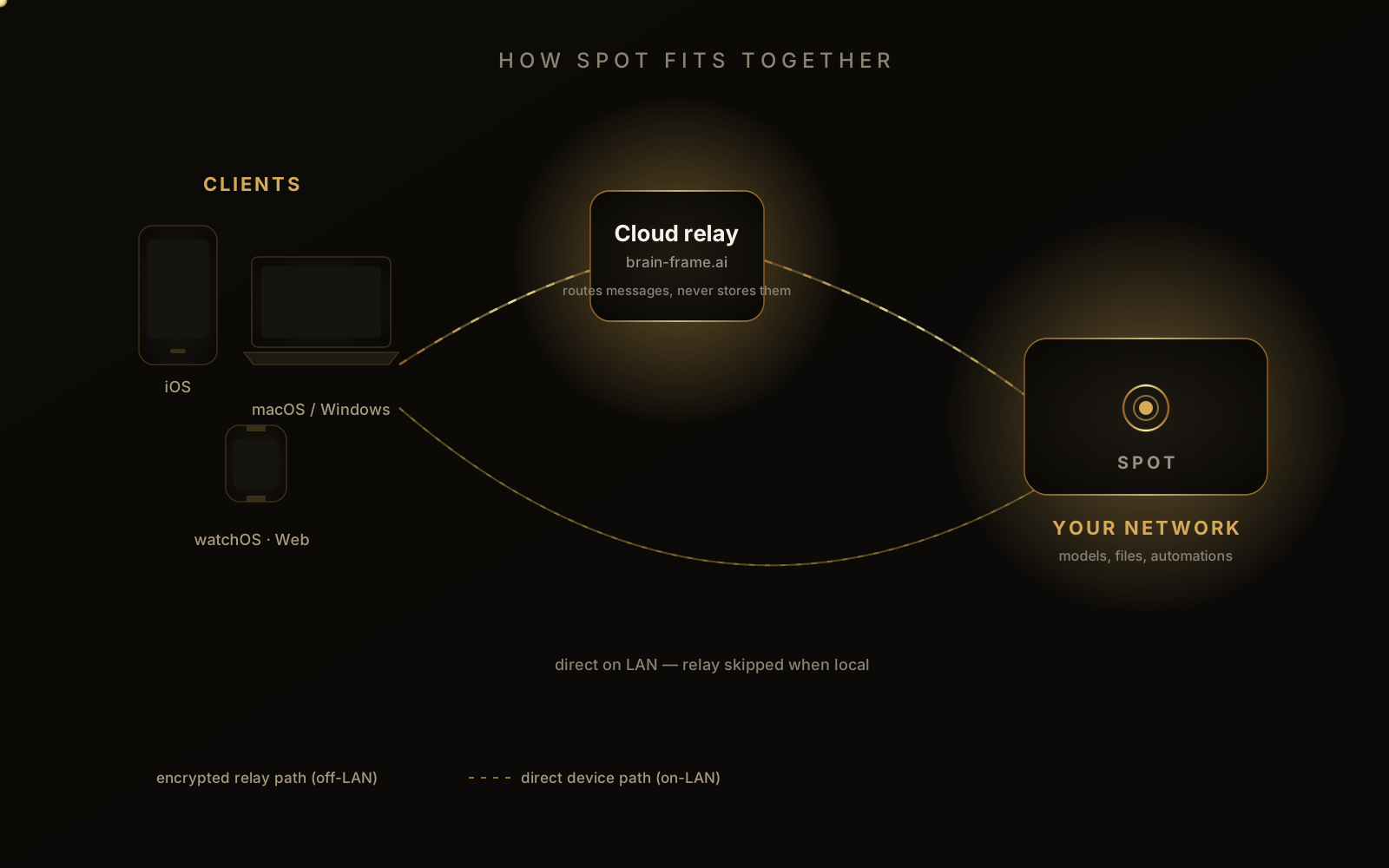
The device
A purpose-built compute appliance that sits on your network and runs the AI, agents, and automations that power Spot.
The clients
Apps for iOS & Android, macOS / Windows / Linux, Web, and Apple Watch.
The relay
A thin cloud service that brokers a secure tunnel when you're away from your network. It carries traffic; it does not run your models. See privacy & sovereignty for details.
Spot specifications
One Spot, ready for the home or office.
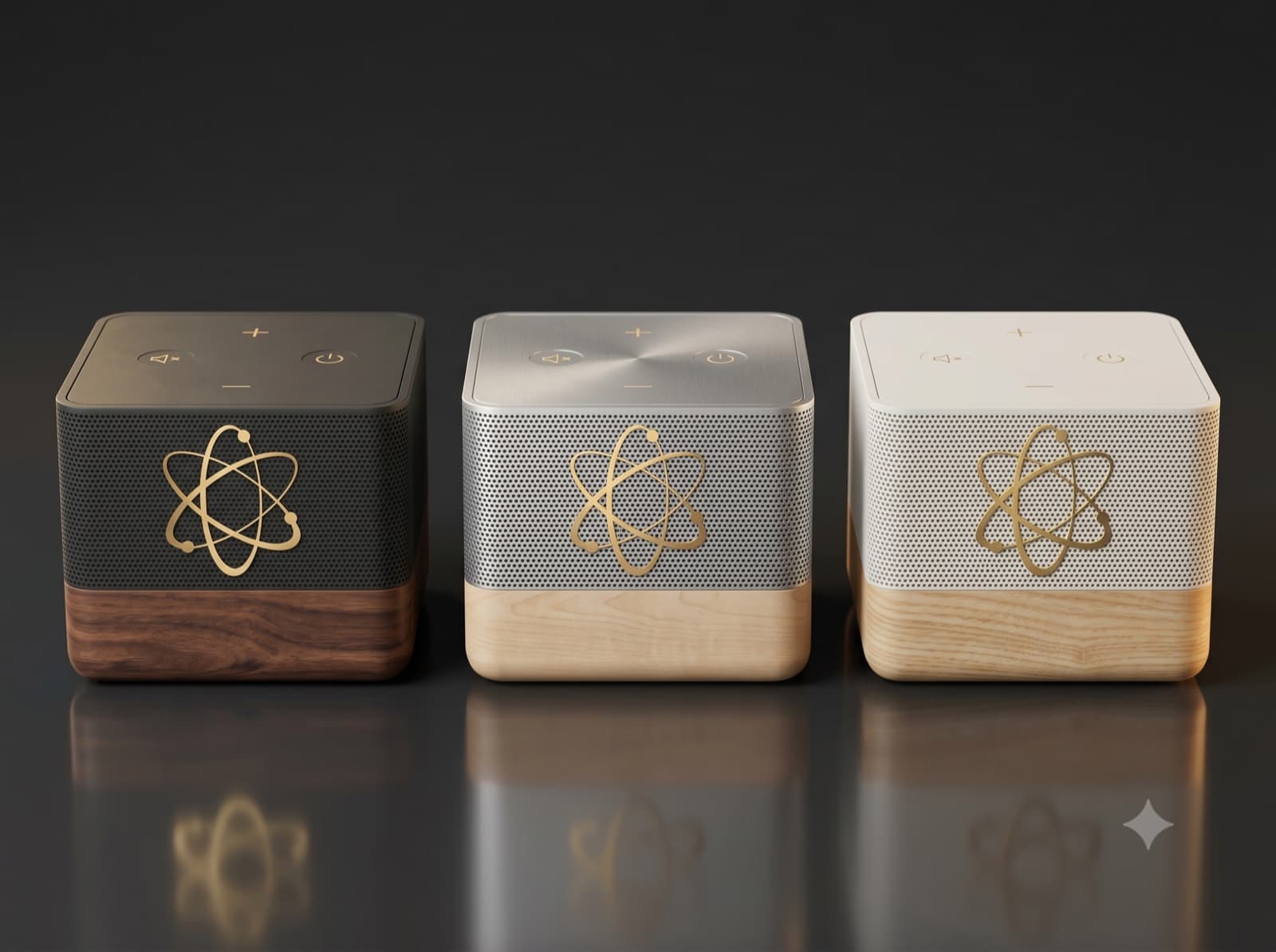
Spot ships with a single, high-end hardware configuration — engineered to run many models of his brain simultaneously without juggling. Here's what's inside the box and what it can do.
Compute & memory
- AI accelerator
- Up to 2070 TFLOPS of on-device AI compute (FP4)
- Memory (RAM)
- Up to 128 GB unified memory
- Storage
- 1 TB NVMe SSD
- On-device models
- Multi-model concurrency — reduces swap delays
AI performance
- Chat throughput
- 25 – 40 tokens / second (measured on today's beta hardware)
- Time to first token
- Around 250 ms typical
- Vision response
- First answer within ~1 second
- Voice response
- Under 1 second from wake word to acknowledgment
- Concurrent users
- Up to 4 active sessions
Connectivity
- Wireless
- Wi-Fi 6E, Bluetooth 5.3
- Wired
- Gigabit Ethernet
- Ports
- USB-C, USB-A, DisplayPort
- IoT integrations
- Lights, plugs, sensors, cameras, locks, and smart-home hubs
Power & physical
- Power
- 15 W – 60 W
- Dimensions
- 120 × 120 × 200 mm
- Cooling
- Active, low-noise fan
What you can do
A few real use cases.
Spot replaces the “ten chat tabs” problem. Each card below cycles through real conversations — what you ask, and how Spot answers.
At home
At work
On the go
See the full list under Spot Features.
Who it's for
People who want AI that stays put.
- Families who want shared agents for the home without piping every conversation into a cloud account.
- Small businesses with documents, customer info, and workflows they don't want to send to third-party LLMs.
- Developers and tinkerers who want a real agent platform — tools, automations, and tools — without renting GPUs by the hour.
- Privacy-minded teams in healthcare, legal, finance, and education that need a clear boundary between “our data” and “the model vendor”.
Why local?
See how Spot compares to Anthropic and OpenAI.
What can it do?
Browse the full feature list.
Get the apps
Visit the Software Warehouse for every platform.